Learn Bitcoin
Fundamentals, first purchase, and Canadian taxes.
A practical path for beginners. No trading signals. No pressure to buy a whole coin.
Important: This is general education only — not financial, investment, legal, or tax advice. Bitcoin is volatile. Only use money you can afford to lose. Rules change. Get professional advice for your situation.
What Bitcoin is
Bitcoin is decentralized digital money. No bank or government issues it, and no company can inflate the supply. A public network of computers agrees on a shared ledger (the blockchain). Anyone can verify it.
There will only ever be 21 million bitcoin. You do not need a whole coin. You can buy a few dollars’ worth. The smallest unit is a satoshi (sat). 1 BTC = 100,000,000 sats.
Bitcoin is not a company. It is not a loyalty point. It is not “crypto” as a grab-bag of tokens. This site teaches Bitcoin — the original, scarce, bearer asset — because that is the part worth understanding first.
Get off zero
“Get off zero” means hold some bitcoin, even a tiny amount, so you have skin in the learning. Zero bitcoin is a position. A small, boring first purchase is how most people start to care about custody, backups, and tax records.
- Start with an amount you are comfortable treating as tuition.
- Buy regularly if that helps you stay calm (dollar-cost averaging).
- Do not borrow to buy. Do not chase pumps.
- Keep learning faster than you increase the amount.
How to buy in Canada
For most beginners, a regulated Canadian platform with Interac e-Transfer is the simplest on-ramp.
- Create an account and complete identity verification (required by Canadian law).
- Deposit CAD — Interac e-Transfer is usually the easiest.
- Buy a small amount of bitcoin. $50 or $100 is enough to learn the buttons.
- Download your transaction history. You will want it later.
We often recommend Shakepay for this first step. Other Canadian options include Newton, Bull Bitcoin, and Bitbuy. Compare fees, funding methods, and whether you can withdraw bitcoin to your own wallet.
Referral disclosure: This Shakepay link supports Curtis Bitcoin Company at no extra cost to you. You can also go directly to shakepay.com.
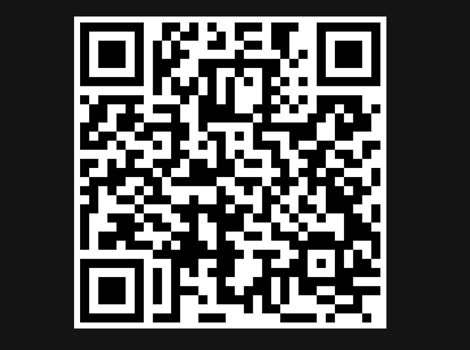
Scan to open Shakepay (Curtis Bitcoin referral).
Wallets and self-custody
“Not your keys, not your coins.” If bitcoin sits on an exchange, you have an IOU. That is fine for a small first amount. It is not a long-term plan for savings you cannot replace.
Small amounts (a learning stack): the wallet inside Shakepay or another reputable app is a reasonable start.
Amounts that matter to you: a hardware wallet (Coldcard, Trezor, Ledger, and similar) keeps keys offline. Write the 12- or 24-word seed phrase on paper. Never photograph it. Never type it into a website. Never share it with “support.”
When you send bitcoin off an exchange, send a tiny test first. Then send the rest. Double-check the address. Bitcoin transactions are not reversible.
Safety rules
- Never share your seed phrase or private keys. Ever.
- Enable 2FA on every account (authenticator app, not SMS if you can).
- Ignore DMs offering help, giveaways, or “wallet verification.”
- Bookmark official sites. Do not follow search-ad links to exchanges.
- If someone rushes you, it is a scam.
Canadian Bitcoin tax guide
A plain-language overview for Canadians who own or plan to buy bitcoin. This is education, not a filing service.
Not tax advice. CRA rules change and every situation is different. Consult a qualified Canadian accountant for your circumstances.
How CRA treats Bitcoin
The Canada Revenue Agency generally does not treat bitcoin as currency. It is usually considered a commodity, like gold. When you dispose of bitcoin, the result is typically a capital gain or loss, unless you are trading as a business.
Simply buying bitcoin and holding it in your own wallet does not trigger a tax event. Taxes generally apply when you sell, trade, spend, or otherwise dispose of it.
Taxable events
You may need to report activity when you:
- Sell bitcoin for CAD (or another fiat currency)
- Trade bitcoin for another cryptocurrency
- Spend bitcoin on goods or services
- Give bitcoin as a gift (deemed disposition rules may apply)
- Use bitcoin in a business (income and expenses may apply)
Generally not taxable: buying with CAD, transferring between your own wallets, and holding long-term.
Capital gains basics
If you sell bitcoin for more than your cost, you have a capital gain. In Canada, only 50% of the capital gain is included in taxable income (the inclusion rate — confirm current law when you file).
Example: you bought 0.1 BTC for $5,000 CAD (including fees) and later sold it for $8,000. Capital gain = $3,000. Taxable portion at 50% = $1,500 added to income.
If you sell for less than your cost, you have a capital loss. Losses can offset capital gains, subject to rules such as the superficial loss rule.
Adjusted cost base (ACB)
Your ACB is what you paid, including purchase fees. CRA generally expects the average-cost method when you buy at different prices over time: total CAD spent ÷ total bitcoin owned.
Keep records of every purchase: date, amount of BTC, CAD price, fees, and platform.
Capital vs business income
CRA looks at intent and activity. Business income is taxed at your full marginal rate — not the 50% capital-gains inclusion.
| Factor | Capital (investor) | Business (trader) |
|---|---|---|
| Typical intent | Long-term savings | Profit from frequent trading |
| Frequency | Occasional buys (DCA, lump sums) | Frequent buys and sells |
| Holding period | Months to years | Days to weeks |
| Tax treatment | 50% capital-gains inclusion | 100% of profit as business income |
Most “get off zero” beginners who buy and hold are likely treated as investors — but get advice if you trade actively.
Common transactions
- Buying with CAD: no immediate tax. Record date, amount, price, and fees for ACB.
- Selling for CAD: report capital gain or loss (proceeds minus ACB).
- Crypto-to-crypto swaps: treated as a disposition at fair market value in CAD — even if you never touch fiat.
- Spending bitcoin: treated like selling, based on value at the time you spent it.
- Gifting: may be a deemed disposition at fair market value.
- ShakeSats and similar rewards: small BTC rewards may be income when received. Track them.
Superficial loss rule
If you sell bitcoin at a loss and buy the same or identical property within 30 days before or after the sale, CRA may deny that loss. The denied loss is added to the ACB of the replacement bitcoin. This matters if you try to harvest losses while staying invested.
Record keeping
CRA expects records for at least six years. For each transaction, track date and time, type, amount of bitcoin, CAD value, fees, platform or wallet, and transaction ID where relevant. Export CSVs regularly.
Tax software
Tools such as Koinly, CoinTracker, and CoinTracking can help calculate ACB. Prices and features change — verify on each provider’s site. A spreadsheet is enough if you have very few transactions.
Filing checklist
- Gather exchange CSVs and wallet history.
- Calculate capital gains and losses for the year.
- Report capital gains on Schedule 3.
- Include the total on your T1 General.
- File by the deadline (typically April 30; June 15 for many self-employed, with balance still due April 30).
- Keep records at least six years.
Canada is implementing the Crypto-Asset Reporting Framework (CARF). Certain platforms will report more information to CRA. Clean records now make that easier.
Ready for a first purchase? Start small, keep the CSV, and keep learning. Shakepay referral link — or go to shakepay.com directly.